What Is a Synthetic Ruby? Understanding the Difference from Natural Rubies
Ruby is one of the most loved gemstones in the world. Its deep red color, timeless beauty, and symbolic meaning make it popular for rings, pendants, earrings, bracelets, and special occasion jewelry. But when buying ruby jewelry, many customers see words like natural ruby, synthetic ruby, lab-created ruby, or created ruby and feel confused.
So, what is a synthetic ruby?
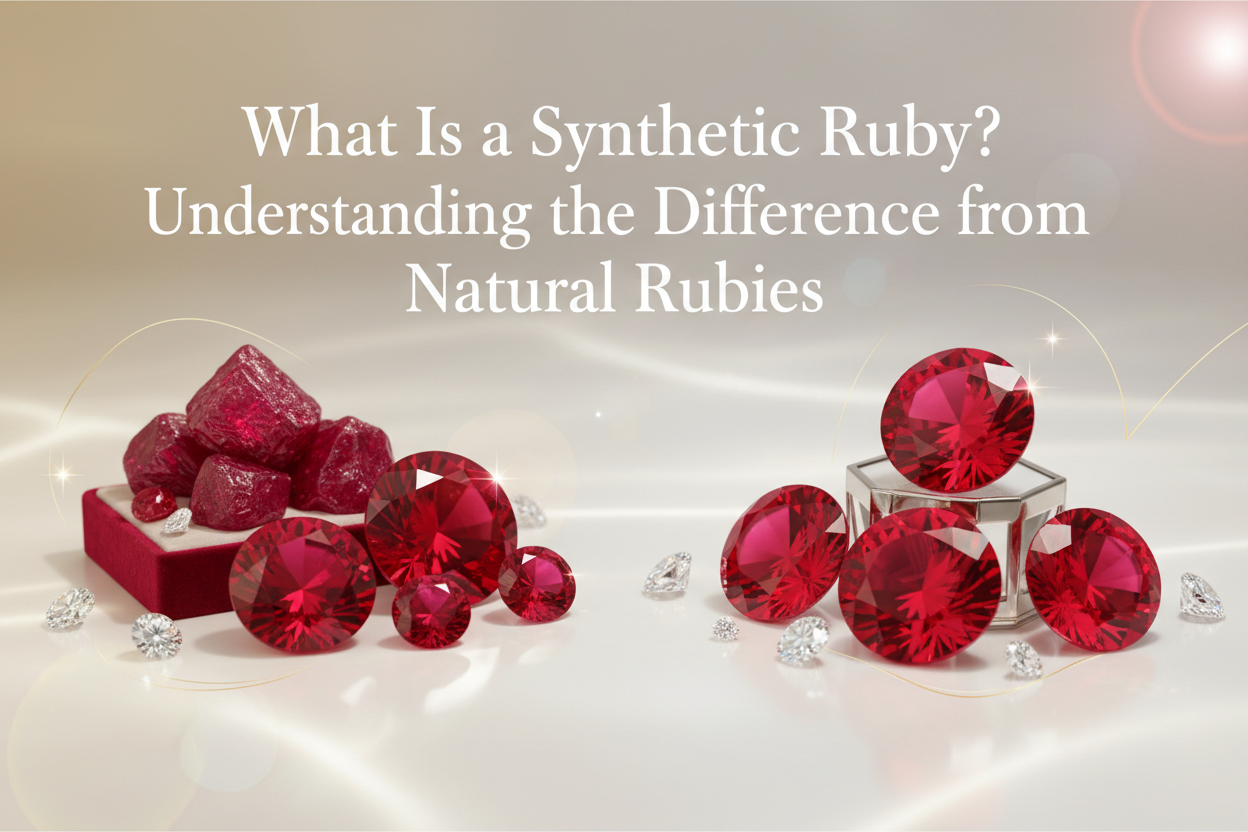
A synthetic ruby is a ruby created in a laboratory instead of being formed naturally inside the earth. It has a similar chemical composition, red color, and hardness to natural ruby, but its origin is different. Natural ruby is formed by nature over a long period of time, while synthetic ruby is made by humans using scientific processes.
At Ishime Jewels, we believe customers should understand exactly what they are buying. This guide explains the meaning of synthetic ruby, the difference between natural and synthetic ruby, how to identify them, and what to check before buying ruby jewelry.
What Is a Synthetic Ruby?
A synthetic ruby is a lab-created version of ruby. It is made using controlled laboratory methods that recreate ruby’s crystal structure and red color.
Ruby belongs to the corundum mineral family. Its red color comes mainly from chromium. Synthetic rubies are also made from corundum material and can look very similar to natural rubies. Because of this, many synthetic rubies may appear bright, clean, and attractive.
However, the main difference is origin.
Natural ruby is created by geological processes inside the earth. Synthetic ruby is created in a laboratory.
This means synthetic ruby may look like ruby and share many physical properties, but it does not have the same natural rarity, geological history, or collector value as a natural ruby.
Is Synthetic Ruby Real Ruby?
This depends on how you define “real.”
A synthetic ruby is not fake glass or plastic. It is a lab-created stone with ruby-like chemical and physical properties. But it is not a naturally mined ruby.
So, the correct way to understand it is:
Synthetic ruby is real lab-created ruby, but it is not natural ruby.
This distinction matters because natural ruby and synthetic ruby have different value, rarity, emotional meaning, and resale appeal.
How Are Synthetic Rubies Made?
Synthetic rubies can be made using different laboratory methods. Some of the common methods include:
Flame Fusion Method
This is one of the oldest and most common methods used to create synthetic ruby. It is also known as the Verneuil process. GIA notes that Auguste Verneuil announced the flame-fusion process for ruby in 1902.
Flame fusion synthetic rubies can be produced in larger quantities and are usually more affordable.
Flux Growth Method
Flux-grown synthetic rubies are created using a slower laboratory process. These stones may have features that look closer to natural stones, but they are still lab-created.
Hydrothermal Method
Hydrothermal synthetic ruby is grown under high heat and pressure in a solution. This process can create convincing synthetic stones, but it is more complex and expensive than basic flame fusion methods.
GIA explains that synthetic rubies are grown by different methods and can show different internal features than natural rubies.
Natural Ruby vs Synthetic Ruby
| Feature | Natural Ruby | Synthetic Ruby |
|---|---|---|
| Origin | Formed naturally inside the earth | Created in a laboratory |
| Rarity | Rare | More easily produced |
| Value | Usually higher | Usually more affordable |
| Appearance | May have natural inclusions | Often cleaner or more uniform |
| Emotional appeal | Natural, rare, meaningful | Budget-friendly ruby look |
| Resale value | Can be stronger for fine stones | Usually lower |
| Certification | Can be certified as natural ruby | Should be disclosed as synthetic |
| Best for | Collectors, heirloom jewelry, natural gemstone lovers | Affordable fashion jewelry |
Both types can be beautiful, but they are not the same. The right choice depends on your budget, purpose, and preference.
Why Are Synthetic Rubies More Affordable?
Synthetic rubies are usually more affordable because they are made in controlled laboratory environments. They do not require rare mining conditions, and they can be produced in larger quantities.
Natural rubies are more valuable because they are rare, formed by nature, and each stone has unique character. High-quality natural rubies can be expensive because fine color, clarity, size, and origin are difficult to find.
How to Identify Synthetic Ruby
It can be difficult to identify synthetic ruby with the naked eye. Some synthetic rubies look very similar to natural rubies, especially to non-experts.
However, these signs may suggest a ruby is synthetic:
- Very clean appearance with almost no inclusions
- Extremely uniform red color
- Very low price for a large ruby
- No certificate or unclear seller details
- Listing says “created ruby” or “lab ruby”
- Product description avoids saying “natural ruby”
- Too-perfect appearance under magnification
The most reliable way to confirm ruby identity is through a trusted gemological lab report.
Is Synthetic Ruby Bad?
No, synthetic ruby is not bad. It can be a good option for customers who want the ruby look at a more affordable price.
Synthetic ruby can be suitable for:
- Budget-friendly jewelry
- Fashion jewelry
- Daily styling
- Large red gemstone designs
- Customers who prefer lab-created stones
- Buyers who want a clean and bright appearance
But synthetic ruby should always be clearly disclosed. The problem is not synthetic ruby itself. The problem is when a synthetic ruby is sold as natural ruby.
Transparency is very important.
Is Natural Ruby Better Than Synthetic Ruby?
Natural ruby is usually considered more valuable because of its rarity, natural formation, and emotional meaning. Many customers prefer natural ruby because each stone has a unique story and character.
Natural ruby may be better if you want:
- A naturally formed gemstone
- Higher rarity
- Strong emotional value
- Heirloom jewelry
- Collector appeal
- Traditional gemstone meaning
- A unique stone with natural inclusions
Synthetic ruby may be better if you want:
- A lower price
- Bright red color
- Clean appearance
- Fashion jewelry
- A budget-friendly ruby alternative
Both can be beautiful, but they serve different purposes.
What We Offer at Ishime Jewels
At Ishime Jewels, we focus on natural gemstone jewelry and handcrafted 925 sterling silver designs. We believe every customer should know what gemstone they are buying.
Our jewelry is created with attention to:
- Natural gemstone beauty
- 925 sterling silver craftsmanship
- Clear product information
- Elegant and wearable designs
- Quality finishing
- Customer trust
- Jewelry care guidance
When buying ruby jewelry or any gemstone jewelry, always check gemstone details, metal purity, product photos, and seller transparency.
Ruby Jewelry Buying Checklist
Before buying ruby jewelry, check these points:
- Does the product say natural ruby or synthetic ruby?
- Is the gemstone origin clearly mentioned?
- Is the metal purity listed?
- Is it 925 sterling silver, gold, or gold-plated?
- Are product photos clear?
- Is the ruby color natural-looking or too perfect?
- Is the price realistic?
- Is there a return or exchange policy?
- Is certification available for expensive ruby jewelry?
- Does the seller clearly answer questions?
This simple checklist can help you avoid confusion and buy with confidence.
Common Terms You May See When Buying Ruby
Natural Ruby
A ruby formed naturally in the earth.
Synthetic Ruby
A ruby created in a laboratory with similar chemical and physical properties to ruby.
Lab-Created Ruby
Another name for synthetic ruby.
Created Ruby
A marketing term often used for synthetic ruby.
Imitation Ruby
A stone or material that only looks like ruby but does not have ruby’s chemical structure. This may include glass or other simulants.
Treated Ruby
A natural ruby that has been treated to improve appearance. Treatments should be disclosed by the seller.
FAQs About Synthetic Ruby
1. What is a synthetic ruby?
A synthetic ruby is a lab-created ruby made using scientific processes. It has ruby-like chemical and physical properties but is not naturally formed inside the earth.
2. Is synthetic ruby the same as natural ruby?
No. Synthetic ruby and natural ruby may look similar, but their origin is different. Natural ruby is formed by nature, while synthetic ruby is created in a laboratory.
3. Is synthetic ruby fake?
Synthetic ruby is not fake like glass or plastic. It is a lab-created ruby. However, it should not be sold as natural ruby.
4. Why is synthetic ruby cheaper?
Synthetic ruby is cheaper because it can be produced in laboratories in larger quantities. Natural ruby is rarer and usually more valuable.
5. Can you tell synthetic ruby by looking at it?
Not always. Some synthetic rubies look very similar to natural rubies. A gemological lab report is the best way to confirm the difference.
6. Is natural ruby better for jewelry?
Natural ruby is preferred by many buyers because of its rarity, natural origin, emotional value, and uniqueness. Synthetic ruby is better for buyers who want an affordable ruby look.
7. What should I ask before buying ruby jewelry?
Ask whether the ruby is natural, synthetic, treated, or imitation. Also check metal purity, return policy, product photos, and certification for expensive pieces.
8. Does Ishime Jewels use synthetic ruby?
At Ishime Jewels, we focus on natural gemstone jewelry and clear product information so customers can buy with confidence.
Final Thoughts
Synthetic ruby is a lab-created gemstone that offers the beauty of ruby at a more affordable price. It can be a good choice for fashion jewelry, but it should always be clearly described as synthetic or lab-created.
Natural ruby, on the other hand, carries rarity, uniqueness, natural origin, and emotional value. If you are buying ruby jewelry for meaning, gifting, collecting, or long-term value, natural ruby is often the preferred choice.
Before buying any ruby jewelry, always check the gemstone origin, metal purity, product details, seller transparency, and certification when needed.
At Ishime Jewels, we believe gemstone jewelry should be beautiful, meaningful, and honestly described. Explore our handcrafted 925 silver and natural gemstone jewelry to find pieces made with care, elegance, and trust.


Written by ishime jewels