

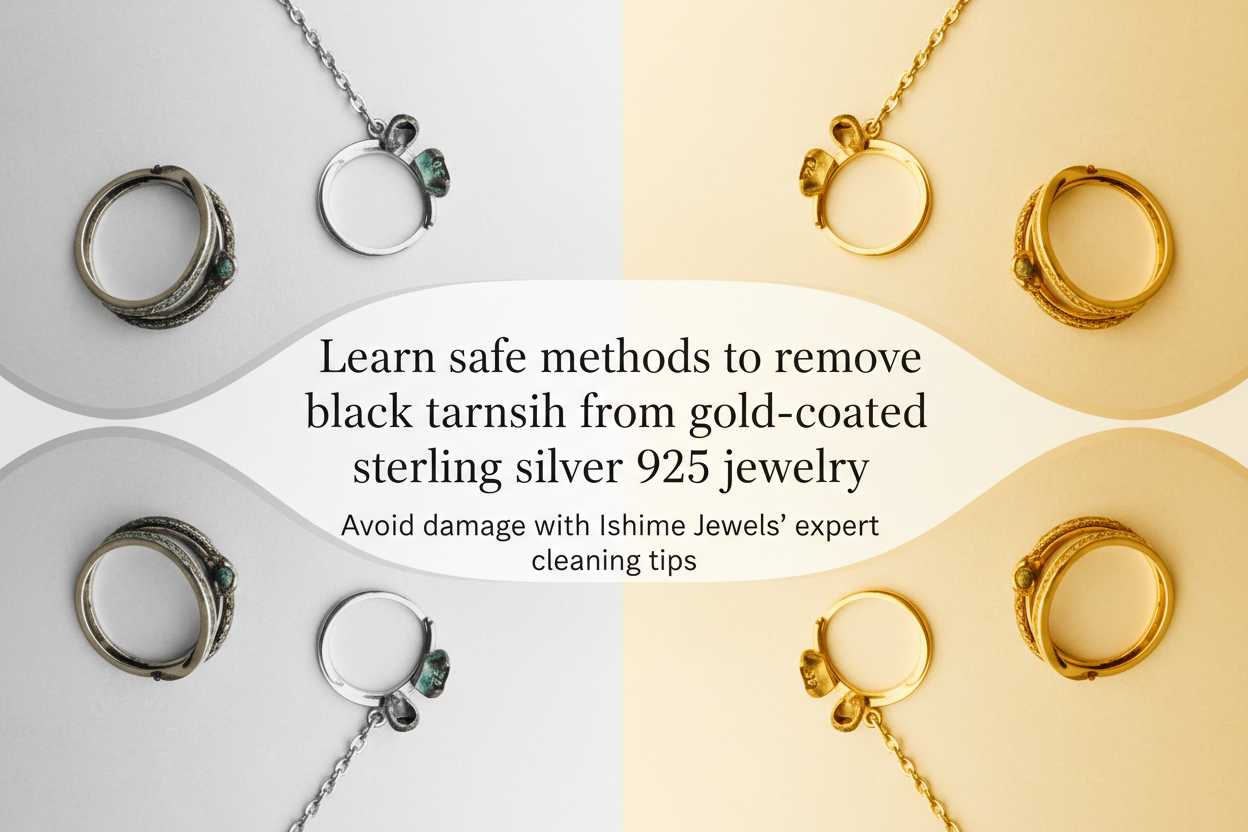
How to Remove Black Tarnish from Gold-Coated Sterling Silver 925 Jewelry | Ishime Jewels Guide
Gold-coated (gold-plated or gold vermeil) sterling silver jewelry is extremely popular because it combines the beauty of gold with the durability of silver.
But over time, you may notice black tarnish appearing — especially on the areas where the gold layer is thin or has worn off.
This tarnish occurs because 925 silver naturally oxidizes, even under gold coating.
Here’s how to safely clean your gold-plated silver jewelry without damaging the gold layer.
💛 1. Understand Why Tarnish Appears
Even though the jewelry looks golden, the base metal is sterling silver, which reacts with:
-
Air
-
Moisture
-
Sweat
-
Perfume
-
Lotion
-
Chemicals
If the gold layer is thin or older, the silver underneath may begin to oxidize, causing:
-
Black spots
-
Dark patches
-
Slight dullness
This is completely normal for gold-coated silver jewelry.
✨ 2. Safe Ways to Remove Tarnish from Gold-Plated Sterling Silver
Gold plating can be delicate, so avoid harsh cleaning methods.
Here are the safe ways to clean your jewelry:
🌿 Method 1: Mild Soap + Warm Water (Safest Option)
-
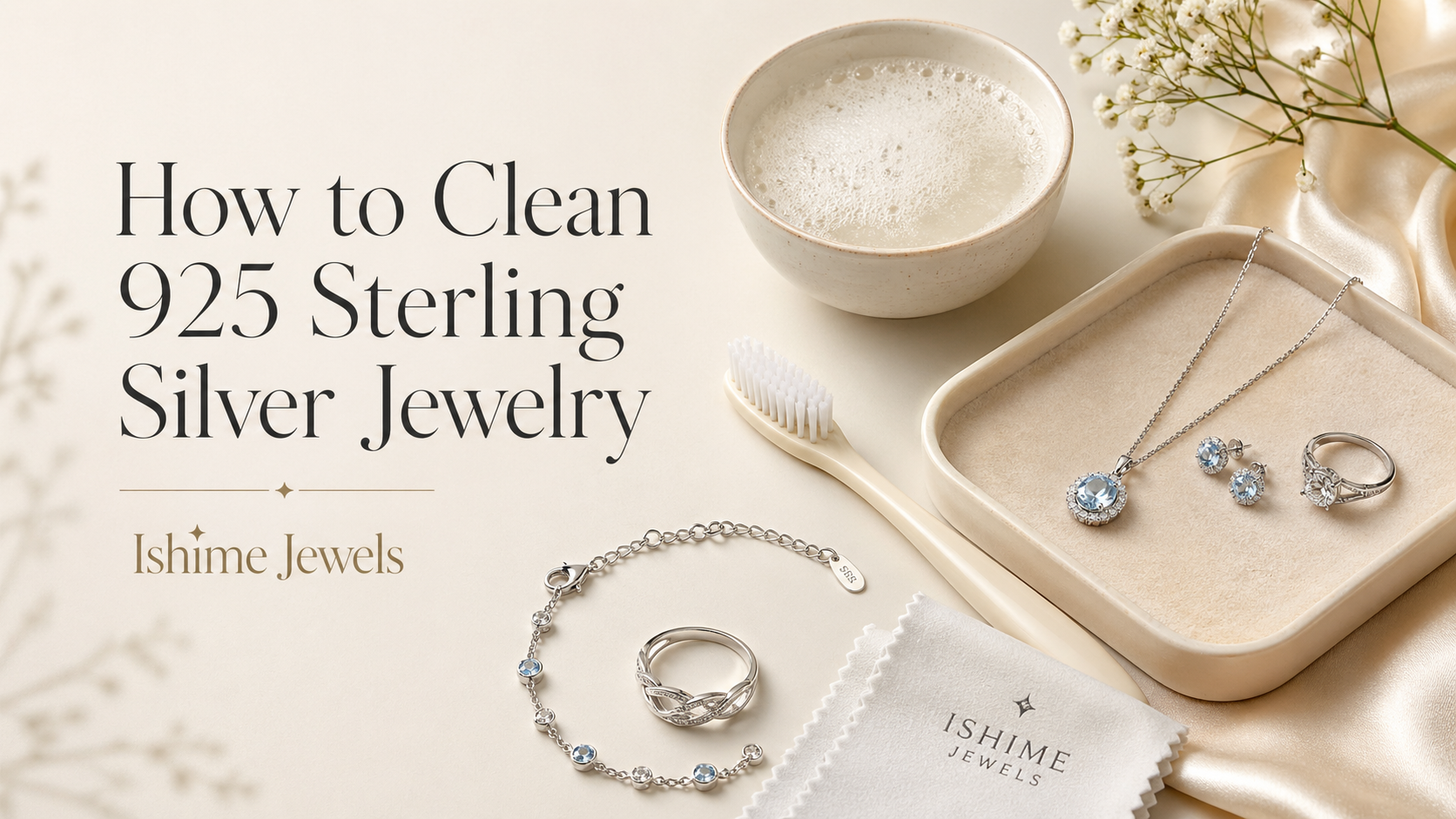
Mix a few drops of mild dish soap in warm water.
-
Soak jewelry for 2–5 minutes.
-
Use a soft cloth or very soft brush to gently wipe tarnish areas.
-
Rinse with clean water.
-
Pat dry immediately using a soft cotton cloth.
✔ Safe for gold plating
✔ Removes light tarnish and dust
🧼 Method 2: Microfiber Cloth Polishing
Use a soft jewelry polishing cloth (not a silver-polish cloth—those are too abrasive).
-
Rub gently on the tarnished areas.
-
Avoid applying too much pressure.
✔ Best for surface-level tarnish
❗ Do NOT use silver-polish cloths or abrasives — they remove gold plating.
💧 Method 3: Gentle Baking Soda Steam Cleaning
This is NOT direct scrubbing — it’s a gentle steam method.
-
Place jewelry in a bowl.
-
Sprinkle ½ teaspoon of baking soda (do NOT rub).
-
Pour hot water slowly to create steam.
-
Let it sit for 1 minute.
-
Rinse and pat dry.
✔ Safe when done gently
✔ Helps loosen tarnish
❗ Do not scrub with baking soda!
🌸 3. What NOT to Use (These Damage Gold Plating)
Avoid these completely:
❌ Toothpaste
❌ Baking soda scrubbing
❌ Lemon, vinegar, or acidic cleaners
❌ Tarnish dips
❌ Abrasive cloths
❌ Ultrasonic cleaners
❌ Silver-polish creams
These will strip or thin the gold layer.
🔄 4. What If the Tarnish Doesn’t Come Off?
If tarnish persists after gentle cleaning, the gold layer may be worn off.
This means the underlying silver is oxidizing.
✔ Solution: Get It Re-Plated
A jeweler can add a fresh layer of gold:
-
1 micron (standard plating)
-
2.5 micron (gold vermeil – lasts much longer)
Re-plating makes your jewelry look brand new again.
🧿 5. How to Prevent Tarnish in the Future
Follow these simple habits:
✔ Store jewelry in airtight pouches
Keeps out air and moisture.
✔ Avoid perfumes, lotions, and sweat
Apply perfume first, wear jewelry last.
✔ Remove jewelry before:
-
Bathing
-
Swimming
-
Exercising
-
Sleeping
✔ Wipe jewelry after each wear
Use a soft cloth to remove oils and moisture.
✔ Use anti-tarnish strips
Place them in your jewelry box.
These preventive steps will greatly reduce tarnishing and keep the gold layer shining longer.
💛 Ishime Jewels Recommendation
For gold-plated 925 silver jewelry:
-
Clean gently
-
Avoid abrasives
-
Re-plate when needed
At Ishime Jewels, we use high-quality gold plating and polishing techniques to ensure long-lasting shine. With proper care, your piece will stay bright and beautiful for years.
🌟 Conclusion
You can remove black tarnish from gold-coated sterling silver — but the cleaning must be gentle.
Use mild soap, soft cloths, and avoid harsh chemicals.
If tarnish remains, re-plating is the safest solution to restore the original beauty.
Gold-coated silver jewelry is elegant, affordable, and long-lasting when cared for correctly.

Written by ishime jewels
%20sterling%20silver%20jewelry%20is%20extremely%20popular%20because%20it%20combines%20the%20beauty%20of%20gold%20with%20the%20durability%20of%20silver.But%20over%20time,%20you%20may%20notice%20black%20tarni...)