How to Safely Remove Tarnish from Your Silver Necklace – Effective Home Remedies That Really Work
Sterling silver jewellery is beautiful, timeless, and versatile — but over time, even the best-quality silver can develop tarnish due to exposure to air, sweat, humidity, lotions, and perfumes.
At Ishime Jewels, we work extensively with premium 925 sterling silver, and we know exactly how to care for it without causing damage.
If your silver necklace has lost its shine, don’t worry — you can restore its brilliance safely at home. The key is using gentle methods that clean the surface without scratching or wearing down the metal.
Here are the best and safest home remedies to remove tarnish from your silver jewellery.
1. Mild Soap & Warm Water – Best for Light Tarnish
This is the simplest and safest method.
How to Do It:
-
Mix a few drops of mild dish soap in warm water.
-
Soak your silver necklace for 5–10 minutes.
-
Gently clean with a soft cloth or a baby toothbrush.
-
Dry completely with a microfiber cloth.
Best For:
-
Light surface dullness
-
Everyday cleaning
-
Polishing fresh jewellery
Why It Works:
Soap removes oils and dirt that make tarnish appear darker while protecting the silver surface.
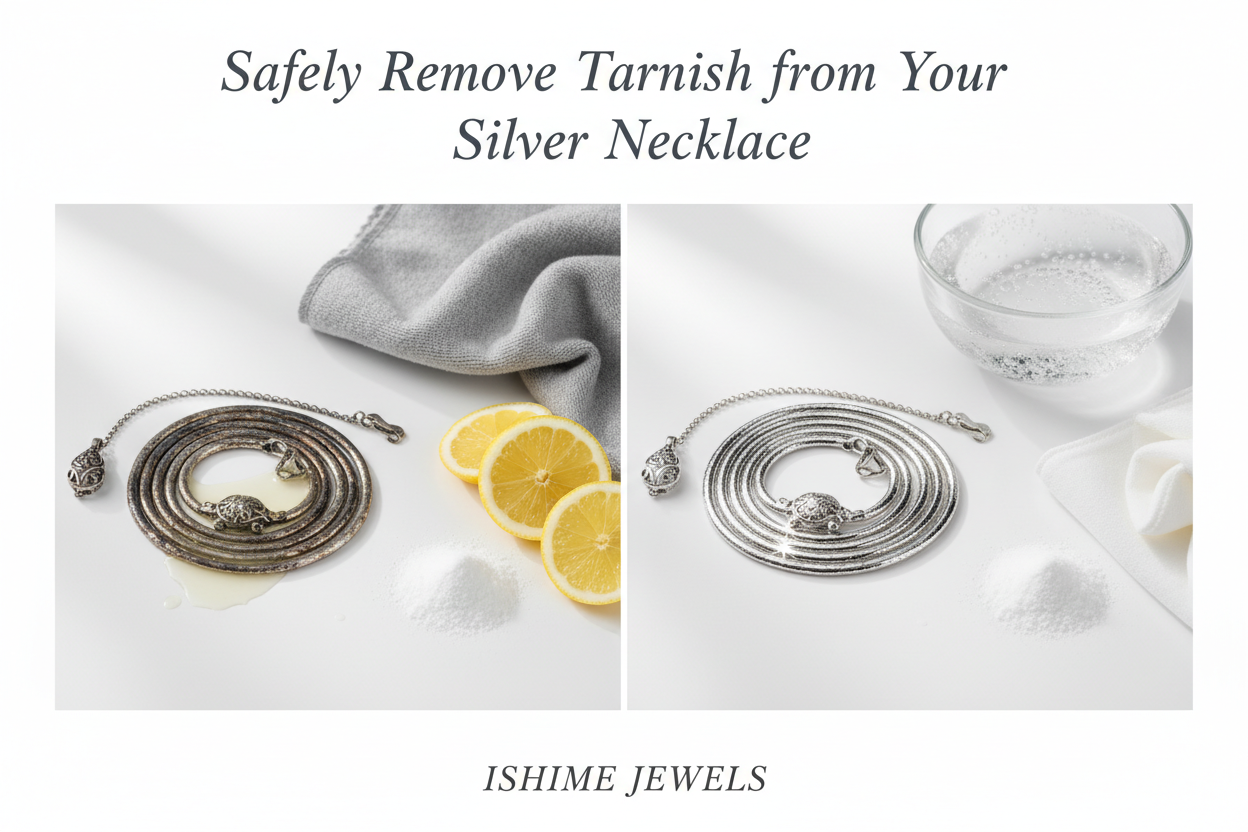
2. Baking Soda & Aluminium Foil Bath – Removes Medium to Heavy Tarnish
This is one of the most effective non-abrasive home remedies.
How to Do It:
-
Line a bowl with aluminium foil (shiny side up).
-
Add hot water, 1 tbsp baking soda, and 1 tbsp salt.
-
Place the silver necklace inside and let it soak for 5 minutes.
-
Rinse and gently polish with a microfiber cloth.
Best For:
-
Dark tarnish
-
Multiple chains or pendants
-
Old stored silver
Why It Works:
This is a chemical reaction, not rubbing — the tarnish transfers from the silver onto the aluminium foil.
Safe, effective, and used by silversmiths worldwide.
3. White Vinegar & Baking Soda – Strong Cleaner for Tough Tarnish
A slightly stronger method but still safe for 925 silver.
How to Use:
-
Place the necklace in a bowl.
-
Add ½ cup white vinegar + 2 tbsp baking soda.
-
Let it sit for 2–3 hours.
-
Rinse well and dry fully.
Best For:
-
Very dark or old tarnish
-
Chains stored for years
Note:
Do NOT use this method for jewellery with:
-
Soft stones (opal, pearl, turquoise)
-
Enamel
-
Oxidised designs
4. Lemon & Salt – Quick Natural Brightening
This works for mild tarnish.
How to Use:
-
Cut a lemon in half, sprinkle salt on it.
-
Rub gently on the silver.
-
Rinse immediately and dry.
Best For:
-
Mild tarnish
-
Quick brightening before events
Warning:
Avoid over-rubbing — lemon is acidic.
Excellent for chains, not recommended for gemstone-set pieces.
5. Toothpaste (Only Gel-Free, Non-Whitening)
Use with CAUTION, but it works if done correctly.
How to Do It:
-
Use a soft cloth and a pea-sized amount of plain white toothpaste.
-
Gently rub the silver for 10–20 seconds.
-
Rinse thoroughly and polish.
Only Use If:
-
The tarnish is stubborn
-
You do not rub aggressively
Do NOT Use:
-
Whitening toothpaste
-
Gel toothpaste
-
Charcoal toothpaste
-
Abrasive scrubs
These can scratch silver.
What NOT to Use on Silver Jewellery
Avoid these because they damage silver:
-
Baking soda as a scrub (scratches surface)
-
Harsh chemicals
-
Bleach
-
Acetone
-
Hand sanitizers
-
Toothbrush with hard bristles
Silver is soft — rough cleaning always causes micro-scratches.
Professional Tips from Ishime Jewels
1. Always Dry Completely
Moisture causes tarnish faster.
2. Store in Airtight Zip Pouches
Includes anti-tarnish strips if possible.
3. Wear Often
Silver stays brighter when worn regularly.
Skin oils actually help slow down tarnish.
4. Clean Before Storing
Remove sweat, perfume, sunscreen, and body oils.
When Should You Avoid Home Remedies?
Avoid DIY cleaning if your jewellery has:
-
Soft or porous gemstones (pearls, turquoise, coral, opal)
-
Oxidised black detailing
-
Antique finishes
-
Enamel work
-
Gold vermeil or gold plating
These pieces should be cleaned with mild soap or taken to a professional.
Conclusion
Tarnish is natural — not a defect — in real 925 silver jewellery.
With the right home remedies, your necklace can look brand new again without damage. For daily wear pieces from Ishime Jewels, these gentle cleaning methods will help maintain shine, beauty, and longevity.
Handmade silver deserves love — and with simple care, it remains stunning for years.

Written by ishime jewels